
What does app integration mean for accounting software?
App integration means your accounting ledger talks directly to billing, CRM, inventory and payroll tools instead of relying on manual spreadsheet exports. When the connection works, sales, payments and bills flow into the books on their own and balances stay aligned.
The details still matter. Some plans cap invoices or charge per user, so app-triggered transactions can push a business past entry-tier limits. Check native marketplaces, API access and bank feeds together, and confirm your accountant can work inside the ledger once daily transactions start syncing.
Quick comparison
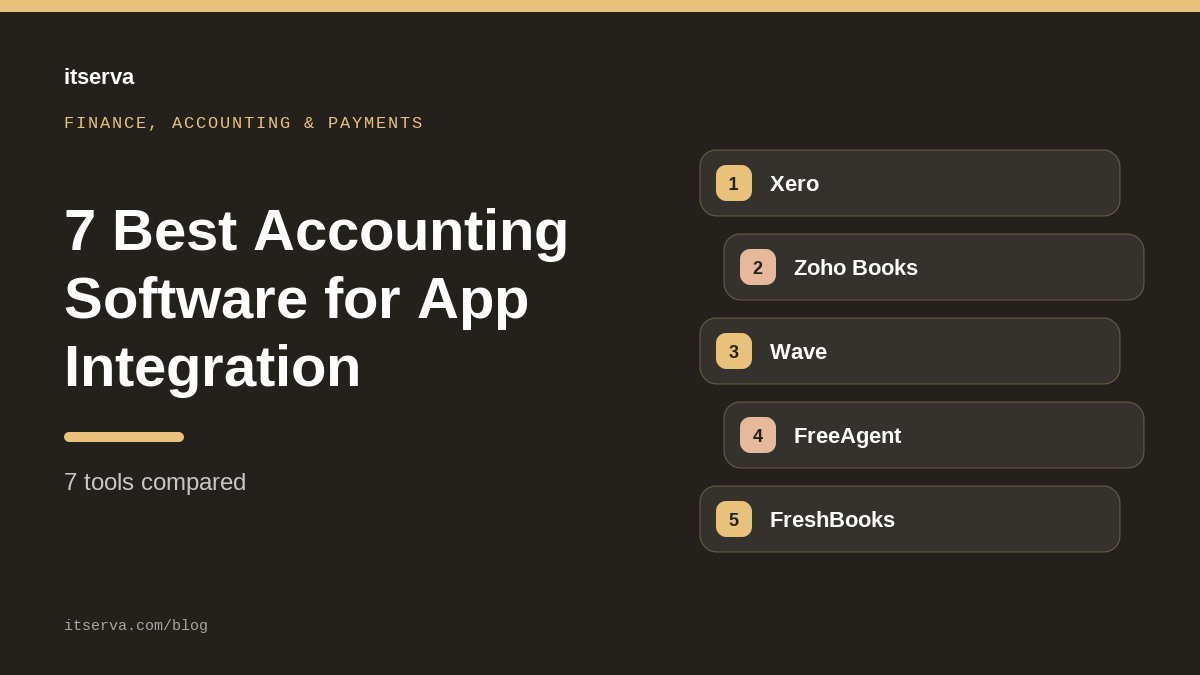
| Tool | Best for | Starting price | Free plan |
|---|---|---|---|
| Xero | Widest app choice with unlimited users | $27/month (Early, regular price) | No (30-day trial) |
| Zoho Books | Best value with Zoho suite links | $15/month (Standard, billed yearly) | Yes (under $50K/year revenue) |
| Wave | Best free start with integrations | $19/month (Pro, regular price) | Yes ($0 Starter plan) |
| FreeAgent | Unlimited users and projects for small firms | $22/month ($220/year, regular price) | No (30-day trial) |
| FreshBooks | Service billing with AI assistant links | $23/month (Lite, regular price) | No |
| Odoo | All-in-one modular apps in one database | $31.10/user/month (Standard, billed yearly) | Yes (One App Free, $0) |
| QuickBooks Online | Widest US app choice with accountant access | $38/month (Simple Start, regular price) | No (30-day trial) |
The 7 best accounting software for app integration
#1
Xero
4.1/5 on Trustpilot (11,547 reviews, checked Nov 2026)
- Best for
- Widest app choice with unlimited users
- Starting price
- $27/month (Early, regular price)
- Free plan
- No (30-day trial)
Xero is cloud accounting software that connects to more than 1,000 third-party apps on every plan, covering billing, CRM, inventory and payroll tools. Its Early plan costs $27 per month at the regular rate and includes unlimited users, bank reconciliation and sales tax tools. Quotes, up to 20 invoices and 5 bills are included, with a 30-day free trial to start.
The trade-off is the low volume ceiling on Early, where app-triggered transactions can count toward the 20-invoice and 5-bill limits. Project tracking and expense claims cost extra as add-ons, and regular prices rise to $59 per month on Growing and $97 on Established. Xero fits growing teams that want unlimited seats and the widest app choice without paying per user.
What we like
- 1,000+ third-party apps on every plan
- Unlimited users on all tiers
- Sales tax, W-9/1099 and bank reconciliation included
- Six-month promo from the $27 regular Early rate
Watch out for
- Early caps at 20 invoices and 5 bills
- Project tracking and expense claims cost extra
- App transactions can count toward Early limits
#2
Zoho Books
3.8/5 on Trustpilot (6,210 reviews, checked Nov 2026)
- Best for
- Best value with Zoho suite links
- Starting price
- $15/month (Standard, billed yearly)
- Free plan
- Yes (under $50K/year revenue)
Zoho Books is accounting software that links directly with Zoho CRM, inventory and expense apps, plus outside tools through its API on Standard and higher plans. Its free plan costs $0 for businesses under $50,000 in annual revenue and covers 1 user plus 1 accountant. Standard starts at $15 per month billed yearly, or $20 billed monthly, for 3 users.
The trade-off is a smaller marketplace beyond the Zoho ecosystem, so teams relying on many outside apps may find fewer native connections. Extra users cost $2.50 per user per month billed yearly, and document autoscans and other specialty modules add further fees. Zoho Books fits small teams already using Zoho apps or starting on a free tier.
What we like
- Free plan below $50,000 in yearly revenue
- Standard at $15 per month billed yearly for 3 users
- Native links across Zoho CRM, inventory and expenses
- API access from Standard
Watch out for
- Free plan capped by revenue with limited add-ons
- Smaller marketplace outside Zoho
- Extra users and modules carry add-on fees
#3
Wave
3.1/5 on Trustpilot (571 reviews, checked Nov 2026)
- Best for
- Best free start with integrations
- Starting price
- $19/month (Pro, regular price)
- Free plan
- Yes ($0 Starter plan)
Wave is accounting and invoicing software with a $0 Starter plan that includes unlimited invoices, bills and bookkeeping records alongside third-party integration support. Upgrading to Pro costs $19 per month at the regular rate, or $190 per year billed annually, and adds automated bank feeds through Plaid plus auto-categorization. Card payments start at 2.9% plus $0.60 per transaction.
The trade-off is that automated bank feeds and receipt scanning need Pro or a paid add-on, so the free plan involves more manual work. Payment processing fees apply on every online payment, and Wave offers fewer multi-user and inventory controls than larger suites. Wave fits solo owners and small businesses that want free core bookkeeping with integration options.
What we like
- $0 Starter with unlimited invoices and records
- Third-party integrations and Plaid bank links on Pro
- Pro drops to $190 per year on annual billing
Watch out for
- Bank feeds and receipt scanning cost extra on Starter
- Card processing fees on every online payment
- Fewer multi-user and inventory controls
#4
FreeAgent
4.0/5 on Trustpilot (3,063 reviews, checked Nov 2026)
- Best for
- Unlimited users and projects for small firms
- Starting price
- $22/month ($220/year, regular price)
- Free plan
- No (30-day trial)
FreeAgent is small-business accounting software covering invoicing, expenses, banking, time tracking and sales tax reporting, with unlimited users and projects at one flat rate. Its regular price is $22 per month or $220 per year, and new subscribers get a 30-day free trial. There are no setup fees and no long-term contract lock-in.
The trade-off is a narrower third-party integration catalog than the major global platforms, so app-heavy teams should check for their must-have connections first. Unlimited receipt scanning costs an extra $6 per month through Smart Capture Unlimited, and inventory depth is limited. FreeAgent fits small businesses and freelancers that value unlimited users and straightforward project tracking.
What we like
- Unlimited users and projects at a flat rate
- Invoicing, expenses, time tracking and tax reporting
- No setup fees or long-term contract
Watch out for
- Smaller integration library than Xero or QuickBooks
- Unlimited receipt scanning adds $6 per month
- Limited depth for complex inventory
#5
FreshBooks
3.7/5 on Trustpilot (1,063 reviews, checked Nov 2026)
- Best for
- Service billing with AI assistant links
- Starting price
- $23/month (Lite, regular price)
- Free plan
- No
FreshBooks is cloud invoicing and accounting software built around client billing, expenses, retainers and payment links, with connectors for Claude and ChatGPT that answer questions about financial data. Lite costs $23 per month at the regular rate and covers 5 billable clients. Plus and Premium raise the limits to 50 clients and unlimited clients.
The trade-off is the tight client cap on Lite, since each extra team member costs $11 per month and regular prices reach $43 on Plus and $70 on Premium. Inventory depth is lighter than full ERP suites, so product-heavy stores may outgrow it. FreshBooks fits freelancers, agencies and service firms that prioritize client invoicing and time-based billing.
What we like
- Clean client invoicing, retainers and estimates
- Claude and ChatGPT connectors for financial questions
- Simple interface for non-accountants
Watch out for
- Lite caps billable clients at 5
- Extra team seats cost $11 per month each
- Lighter inventory depth than ERP suites
#6
Odoo
3.0/5 on Trustpilot (1,327 reviews, checked Nov 2026)
- Best for
- All-in-one modular apps in one database
- Starting price
- $31.10/user/month (Standard, billed yearly)
- Free plan
- Yes (One App Free, $0)
Odoo is a modular business suite where accounting shares one database with sales, inventory, CRM and eCommerce apps instead of relying only on outside connectors. Its One App Free plan costs $0 for unlimited users on a single app. Standard costs $31.10 per user per month billed annually, or $38.90 billed monthly, for all apps.
The trade-off is per-user pricing that climbs as headcount grows, plus a steeper setup and learning curve than single-purpose accounting apps. Custom plans cost $61.00 per user per month billed annually for custom development or Odoo.sh hosting. Odoo fits businesses that want accounting, sales and inventory unified inside one modular platform.
What we like
- Accounting shares one database with CRM, sales and inventory
- $0 One App Free plan for unlimited users
- Online, Odoo.sh or on-premise hosting
Watch out for
- Per-user pricing rises with headcount
- Custom plan needed for custom development and Odoo.sh
- Longer setup than single-purpose apps
#7
QuickBooks Online
3.7/5 on Trustpilot (17,000+ reviews, checked Nov 2026)
- Best for
- Widest US app choice with accountant access
- Starting price
- $38/month (Simple Start, regular price)
- Free plan
- No (30-day trial)
QuickBooks Online is cloud accounting software from Intuit that connects with hundreds of third-party apps alongside automated bank feeds, invoicing and expense tracking. In the US, Simple Start costs $38 per month at the regular rate and covers 1 user plus accountant access. Higher tiers scale the platform as a business grows.
The trade-off is the single standard user seat on Simple Start, with monthly prices rising noticeably on Essentials, Plus and Advanced. Multi-currency and inventory features also need higher tiers, so the entry plan suits simpler setups. QuickBooks Online fits businesses that want broad app support and easy collaboration with an accountant.
What we like
- Hundreds of third-party apps
- Accountant access from Simple Start
- Tiers scale across growth stages
Watch out for
- Simple Start covers only 1 standard user
- Prices rise sharply on higher tiers
- Multi-currency and inventory need higher tiers
How we chose
We ranked seven established cloud accounting platforms with public pricing and clear integration details, focusing on app breadth, API access and overall fit for connected teams. We weighted the size of each app ecosystem first, then entry-tier limits, user licensing and regular monthly prices. Prices and Trustpilot ratings with review counts come from vendor pricing pages and public review listings, checked in November 2026. No vendor paid for placement, and we did not run hands-on tests; we compare published information.
Why entry-tier limits matter when apps sync daily
Connected apps push records into the ledger all day, so transaction volume can test entry-tier caps fast. On Xero Early, for example, transactions started by app partners can count toward the 20-invoice and 5-bill monthly limits.
Add-ons change the total too. Automated bank feeds, receipt scanning, extra users and time tracking may need paid upgrades, so compare regular monthly prices rather than short promotional rates when budgeting for a connected stack.
How to choose
Start with the apps that must sync every day. List your payment processor, invoicing tool, CRM, payroll and inventory apps, then confirm native support or a reliable connector for each before comparing accounting features.
Next, check entry-tier limits on invoices, bills and users. Work out whether low-cost plans cap monthly volume, charge per user or count app-generated transactions toward quotas, since those rules decide the real monthly cost.
Finally, price the regular rate after any introductory promo and confirm accountant access. Factor in add-ons for receipt scanning, expense claims or payroll, then trial the shortlist with real transactions from your connected apps.