
What should a Carbon Black replacement actually do?
Carbon Black combined antivirus with endpoint detection and response, so a replacement needs to do both jobs: block known malware and record what happens on each device so analysts can investigate attacks. The strongest options add automated response, such as isolating a device or rolling back ransomware-encrypted files without waiting for a person.
Price is the other split. Some vendors publish per-device annual prices you can buy online, while others sell only through partners or sales quotes, which makes the real cost harder to pin down. Start by checking whether your current Microsoft 365 plan already includes endpoint protection before paying for a separate platform.
Quick comparison
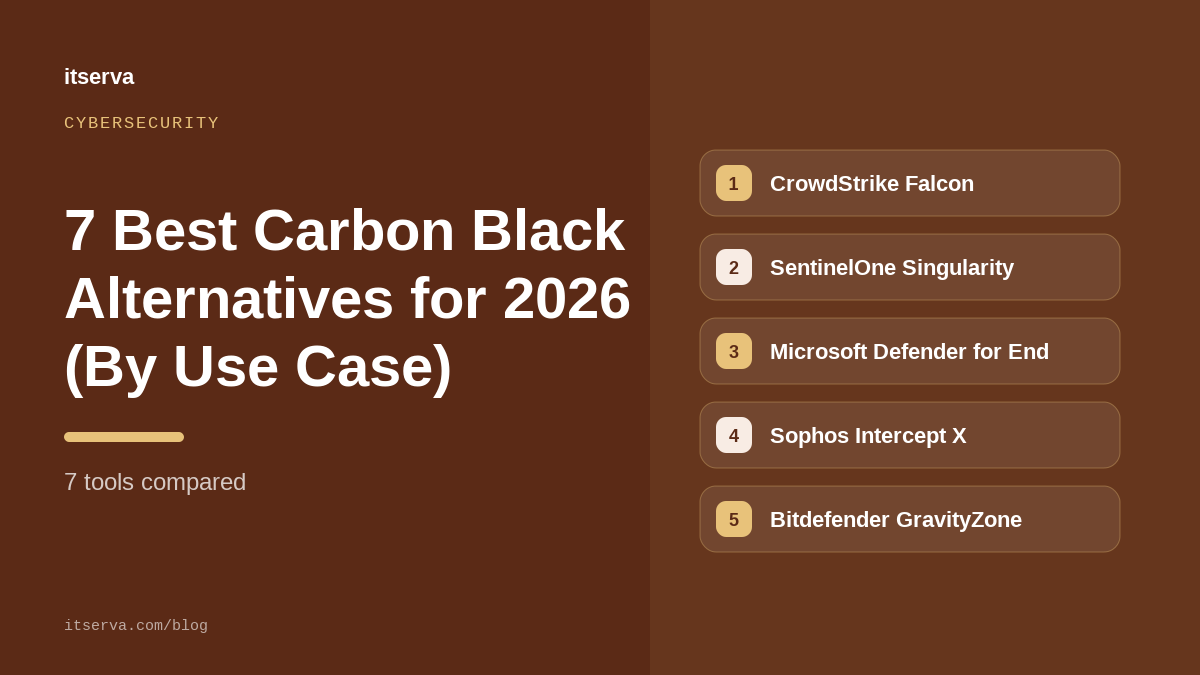
| Tool | Best for | Starting price | Free plan |
|---|---|---|---|
| CrowdStrike Falcon | Enterprise EDR and the default Carbon Black replacement | $59.99/device/year (Falcon Go, annual billing) | No (15-day free trial) |
| SentinelOne Singularity | Autonomous response and ransomware rollback | $69.99/endpoint/year (Singularity Core, 5-100 workstations) | No (demo available) |
| Microsoft Defender for Endpoint | Microsoft 365 shops | $5.20/user/month (Plan 2, annual term) | No (trial available) |
| Sophos Intercept X | Small-business value | $28/user/year (Intercept X Advanced, 3-year term) | No (30-day free trial) |
| Bitdefender GravityZone | Mid-market detection quality at a lower price | $77.69/year (Business Security, 3 devices) | No (1-month free trial) |
| Palo Alto Cortex XDR | Palo Alto shops consolidating security tools | Custom pricing | No (demo available) |
| Trend Micro Apex One | One vendor across endpoint, email and server | Custom pricing | No (free trial) |
The 7 best Carbon Black alternatives
#1
CrowdStrike Falcon
- Best for
- Enterprise EDR and the default Carbon Black replacement
- Starting price
- $59.99/device/year (Falcon Go, annual billing)
- Free plan
- No (15-day free trial)
CrowdStrike Falcon is a cloud-native endpoint platform built around one lightweight sensor and one console. Falcon Go costs $59.99 per device per year and covers next-generation antivirus, device control and mobile protection for up to 100 devices. Falcon Pro adds firewall management at $99.99, and Falcon Enterprise adds full EDR with threat intelligence and hunting at $184.99 per device per year.
The trade-off is the jump between tiers. EDR only arrives at Enterprise, so teams that need investigation tools pay more than three times the Go price, and the managed Falcon Complete service is quote-based. CrowdStrike Falcon fits large teams that want the most widely deployed endpoint platform and can budget for its higher tiers.
What we like
- Single agent and console for every module
- Published per-device prices for three tiers
- Managed Falcon Complete option for teams without a SOC
- 30-day money-back assurance
Watch out for
- EDR only on the $184.99 Enterprise tier
- Go is capped at 100 devices
- Add-ons push the bill well past the entry price
#2
SentinelOne Singularity
- Best for
- Autonomous response and ransomware rollback
- Starting price
- $69.99/endpoint/year (Singularity Core, 5-100 workstations)
- Free plan
- No (demo available)
SentinelOne Singularity is an AI-driven endpoint platform that detects and responds on the device itself. Singularity Core starts at $69.99 per endpoint per year for 5 to 100 workstations, Control adds device and firewall control at $79.99, and Complete adds full EDR, XDR and an AI assistant at $179.99. Its agent can kill malicious processes and roll back files encrypted by ransomware.
The trade-off is buying through partners. All purchases go through an authorized partner, and the partner price controls where it differs from the list price, so the published figure is a starting point rather than a final quote. SentinelOne Singularity fits mid-market and enterprise teams that want automated response and flexible deployment, including on-premises setups.
What we like
- Autonomous on-device response
- One-click ransomware rollback
- On-premises and air-gapped deployment options
- 90-day data retention on Commercial
Watch out for
- Sold only through partners
- List prices cover 5 to 100 workstations only
- Enterprise tier is quote-based
#3
Microsoft Defender for Endpoint
- Best for
- Microsoft 365 shops
- Starting price
- $5.20/user/month (Plan 2, annual term)
- Free plan
- No (trial available)
Microsoft Defender for Endpoint is the cheapest credible alternative for organizations already paying for Microsoft 365. Plan 1 costs $3.00 per user per month and covers next-generation antivirus, attack surface reduction and device control. Plan 2 costs $5.20 per user per month and adds full EDR, automated investigation, advanced hunting and six months of data retention.
The trade-off is depth outside Windows. Defender is strongest on Windows, with macOS and Linux support that is less polished than the leaders, and its console spans many Microsoft security products, which takes time to learn. Microsoft Defender for Endpoint fits Microsoft 365 shops that want EDR bundled into a suite they already pay for.
What we like
- One license covers up to 5 devices
- Plan 2 included in Microsoft 365 E5
- Full EDR for $5.20 per user per month
- Defender for Business at $3.00 for up to 300 users
Watch out for
- Best on Windows
- Console takes time to learn
- No free plan
#4
Sophos Intercept X
- Best for
- Small-business value
- Starting price
- $28/user/year (Intercept X Advanced, 3-year term)
- Free plan
- No (30-day free trial)
Sophos Intercept X is the best value pick for small and mid-size businesses. Intercept X Advanced starts at $28 per user per year on a 3-year term and combines deep learning malware detection with CryptoGuard anti-ransomware that rolls back encrypted files. The Advanced with XDR tier costs $48 per user per year, and managed threat response costs $79.
The trade-off is enterprise depth. The management console feels older than CrowdStrike or SentinelOne, and its XDR features trail the leaders for large teams with dedicated analysts. Sophos Intercept X fits small teams that need strong protection at a low price, with the option of adding a managed response service later.
What we like
- Deep learning plus anti-ransomware rollback
- Lowest entry price on this list
- Managed threat response option
- 30-day free trial
Watch out for
- Prices assume a 3-year term
- Console feels dated
- Enterprise XDR trails the leaders
#5
Bitdefender GravityZone
- Best for
- Mid-market detection quality at a lower price
- Starting price
- $77.69/year (Business Security, 3 devices)
- Free plan
- No (1-month free trial)
Bitdefender GravityZone is a layered endpoint platform built on machine learning, behavioral analysis and continuous monitoring of running processes. The Business Security entry bundle starts at $77.69 per year for three devices, and it covers Windows, macOS and Linux plus servers and mobile from one console. Higher tiers add EDR and XDR, and small orders can be bought online for up to 100 devices.
The trade-off is a busy console. GravityZone packs many features into dense views that new admins find crowded at first, and larger deployments still go through a partner sales conversation. Bitdefender GravityZone fits mid-market teams that want detection quality close to the enterprise leaders at a lower bill.
What we like
- Strong detection across Windows, macOS and Linux
- Cloud or on-premises management
- Buy online up to 100 devices
- 1-month free trial
Watch out for
- Console takes learning
- Enterprise deals need a partner quote
- Entry bundle covers only 3 devices
#6
Palo Alto Cortex XDR
- Best for
- Palo Alto shops consolidating security tools
- Starting price
- Custom pricing
- Free plan
- No (demo available)
Palo Alto Cortex XDR is an extended detection and response platform that correlates endpoint, network, cloud, identity and email data in one place. It comes in two tiers, Cortex XDR Prevent and Cortex XDR Pro, and adds Unit 42 managed detection and response for teams without their own analysts. That cross-domain view helps trace an attack from an endpoint through the network to a cloud workload.
The trade-off is pricing. Cortex XDR is sold on a quote basis, so there is no published per-device price to compare, and costs run higher than CrowdStrike or SentinelOne for buyers outside the Palo Alto ecosystem. Palo Alto Cortex XDR fits organizations already running Palo Alto firewalls and cloud security that want one vendor across the stack.
What we like
- Endpoint, network and cloud data in one platform
- Two tiers plus a managed MDR option
- AI detection across many data sources
- Strong fit for existing Palo Alto customers
Watch out for
- No published price
- Quote-based sales
- Less value outside the Palo Alto ecosystem
#7
Trend Micro Apex One
- Best for
- One vendor across endpoint, email and server
- Starting price
- Custom pricing
- Free plan
- No (free trial)
Trend Micro Apex One is a single-agent endpoint platform that covers endpoints, email and servers from one console. It blends machine learning, behavioral analysis and virtual patching to stop threats before a patch is available, and its ransomware rollback restores files encrypted before detection. The Vision One platform adds XDR correlation across those layers for investigation and threat hunting.
The trade-off is pricing and sprawl. Apex One is sold on a quote basis for most deals, and the console covers so many products that it can feel sprawling for a small team. Trend Micro Apex One fits mid-size teams that want one vendor across endpoint, email and server security rather than a set of point tools.
What we like
- Single agent for endpoint, email and server
- Virtual patching before fixes ship
- Ransomware rollback included
- Vision One XDR option
Watch out for
- Quote-based pricing
- Console can feel sprawling
- Best as part of a wider Trend Micro stack
How we chose
We compared seven endpoint platforms that replace Carbon Black, covering enterprise EDR, autonomous response, Microsoft 365 bundles, small-business value and full XDR. We weighted detection and response depth first, then published pricing, then fit for different team sizes and existing stacks. Prices come from vendor pricing pages checked in November 2026, with quote-based tools marked as custom pricing. No vendor paid for placement, and we did not run hands-on tests; we compare published information. Trial availability was checked on the same vendor pages, so buyers can shortlist tools they can try before paying.
Switching from Carbon Black without a protection gap
Never remove the old agent from every device on the same day you install the new one. Run a pilot group with both agents in monitoring mode first, confirm that policies, exclusions and firewall rules carry over, and watch for false positives on the business apps your teams use every day.
Roll out in waves by department, keeping Carbon Black active until each wave reports healthy on the new platform. Confirm that alerting, device isolation and ransomware rollback still work, since every vendor names those controls differently and policies often need manual mapping.
How to choose
Start with your existing stack. Microsoft 365 shops should price Defender for Endpoint first, since Plan 2 may already be included, while Palo Alto customers should get a Cortex XDR quote before comparing standalone endpoint tools.
Next, compare the same unit of cost. Per-device annual prices, per-user monthly prices and quote-based deals do not line up directly, so price your real device count on each shortlisted tool, add the managed-service tier if you have no security staff, and check whether EDR is included or sits on a higher plan.
Finally, trial two tools on a pilot group. Check how quickly the agent installs, how noisy alerts are on your real apps, and how easily an analyst can isolate a device and roll back an attack before you commit to a fleet-wide rollout.